Can Artificial Intelligence Detect Heart Problems Before We Even Notice Them?
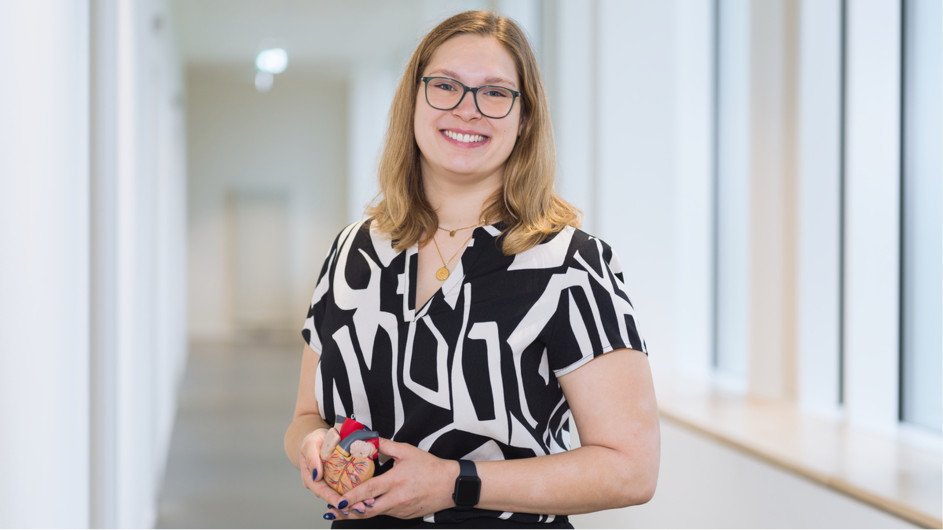
In the latest episode of KIT’s podcast "Nachgefragt – wissen wie’s läuft", Silvia Becker from KIT-IBT discusses how AI can help uncover hidden patterns in ECG data and support the future of cardiac diagnostics.
The episode explores topics such as:
- What an ECG actually measures
- Which heart diseases can be detected through ECG recordings
- What AI can recognize that may not be visible to the human eye
- The opportunities and limitations of AI in medicine
Generative AI and Science: What Is at Stake?
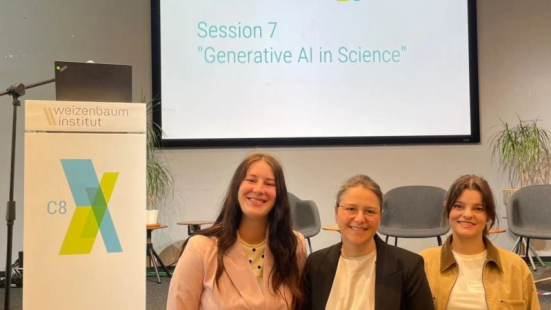
The 8th Weizenbaum Conference, held under the theme “Generative AI and Science: What Is at Stake?”, provided an important forum for interdisciplinary discussions on the opportunities, challenges, and societal implications of GenAI in scientific research. As part of the conference, researchers from the DiTraRe Leibniz ScienceCampus project at ITAS presented their work entitled “Automated Governance in Science? The Impact of Generative AI on Epistemic Authority and Responsibility.” The presentation, developed in collaboration with Linda Nierling, Angelina Sophie Dähms, and Dana Mahr, examined how GenAI is transforming scientific practices and raising fundamental questions regarding epistemic authority, accountability, and responsibility in research and scientific governance. The contribution highlighted the growing role of AI systems in knowledge production and decision-making processes within science, while reflecting on the implications for scientific governance and the distribution of responsibility among researchers, institutions, and technological systems. The presentation is available online.
The conference offered valuable opportunities for exchange with scholars from diverse disciplines and generated insightful discussions on the future relationship between AI and science. The feedback received during the session contributed important perspectives for the ongoing research. Special thanks go to session chair Ingmar Mundt for moderating the session “Generative AI in Science” and to conference organizers Anne K. Krueger and Florian Butollo for creating an inspiring and stimulating event.
IfSS-Team at the 10th KSWD in Berlin
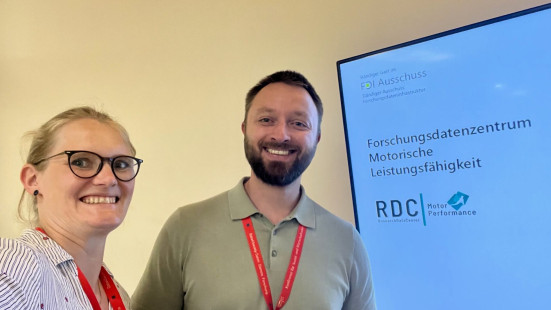
Hot topics in summery Berlin ☀️🐜 At the 10th KSWD organised by the German Data Forum (RatSWD) & KonsortSWD – NFDI4Society in the capital, our team members Christian Rose and Dr. Katja Keller were treated to a whole host of topics!
To name just a few of the topics covered at the conference, which ran under the motto #Data4society: the Research Data Act, which we hope will come into force soon; current developments in research data centres; AI and its impact on our data (both positive and, potentially, negative); collaboration between infrastructure providers and the scientific community; and, of course, the future of the German National Research Data Infrastructure (NFDI)! Katja also contributed to the varied programme with a Pecha Kucha presentation on the topic ‘Building bridges: Research data management (RDM) in sports science as a model for interdisciplinary cooperation’. Thank you to the organisers for the wonderful conference!
IBT at Helmholtz AI Conference in Munich 🥨🍺
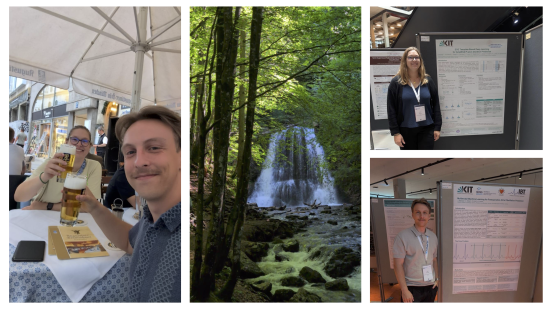
As one of Germany's leading AI conferences, HAICON never fails to impress with its broad yet deep scientific program. It's always great to come together, exchange ideas, and be part of an ever-evolving AI landscape.
This year, particularly interesting were the talks on benchmarking and testing of AI models. As new model versions and architectural advances continue to emerge, the question of how we rigorously evaluate and compare these models becomes increasingly important.
We're proud that Julian and Silvia not only attended but also presented their ongoing research in the poster session, sparking many great conversations along the way!
Recent: July Colloquium with Pascal Friederich
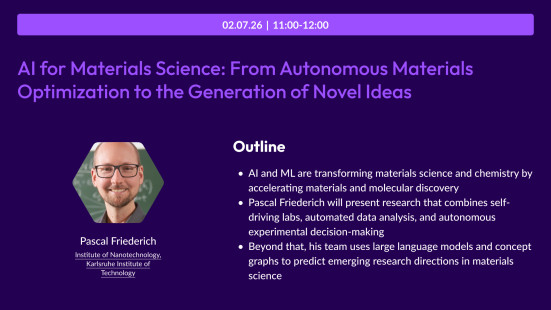
Yesterday our special guest at the Interdisciplinary Colloquium on Digitalisation of Research, Pascal Friederich, gave a talk on AI for Materials Science: From Autonomous Materials Optimization to the Generation of Novel Ideas. The presentation and video recording will be available soon.
Abstract: AI and machine learning methods are playing an increasingly important role in science. In materials science and chemistry, they can accelerate the screening, design, and discovery of new molecules and materials in multiple ways, e.g. by virtually predicting properties of molecules and materials, by extracting hidden relations from large amounts of simulated or experimental data, or even by interfacing machine learning algorithms for autonomous decision-making directly with automated high-throughput experiments. In this talk, I will focus on our research activities automated data analysis and autonomous decision-making in self-driving labs [1], as well as our work on predicting new research directions in materials science using large language models and concept graphs [2].
[1] Wu et al., Science 386, 6727 (2024)
[2] Marwitz et al., Nature Machine Intelligence 8, 535–544 (2026)
Recent: June Colloquium with Andrés Saravia
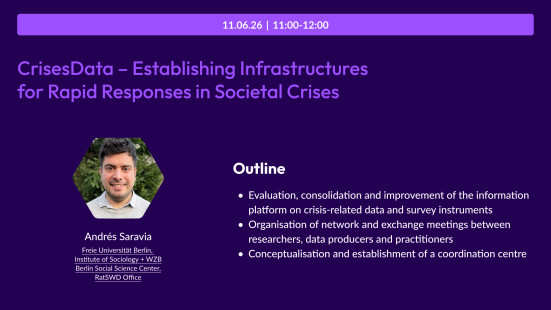
Our June Colloquium's special guest, Andrés Saravia (Freie Universität Berlin, WZB Berlin Social Science Center & Rat für Sozial- und Wirtschaftsdaten (RatSWD)) presented CrisesData - a project tackling rapid responses to societal crises like pandemics and wars. Missed our June Colloquium? Check out his talk and presentation!
🌍 CrisesData: Building Rapid-Response Infrastructures for Societal Crises
At the Interdisciplinary Colloquium on Digitalisation of Research, Andrés Saravia unveiled CrisesData - a project revolutionising how we respond to crises like COVID-19, natural disasters, and wars.
🔧 The Project’s Core
CrisesData focuses on three pillars:
1️⃣ A data platform for real-time and historical crises information.
2️⃣ Long-term surveys integrating crisis-related content.
3️⃣ A coordination center for rapid, effective responses.
💡 Key Takeaway
The shift from reactive to proactive crisis management is crucial. The work highlights how digital infrastructures can empower researchers and policymakers to act before disasters strike.
📌 Missed the Talk?
Watch the recording: YouTube-Link
Have a look at the presentation: Saravia, A. (2026). CrisesData – Establishing Infrastructures for Rapid Responses in Societal Crises. Zenodo.
Upcoming: August Colloquium with Signe Mezinska
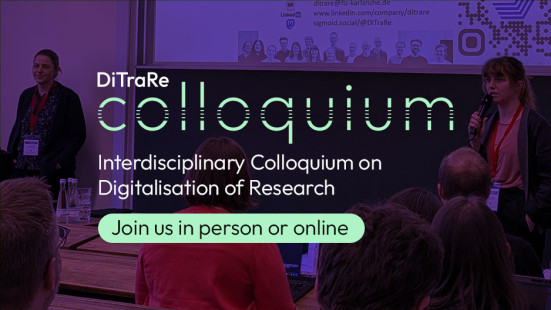
Our next Colloquium's guest will be Signe Mezinska, Associate Professor, Faculty of Medicine and Life Sciences Senior Researcher, Institute of Clinical and Preventive Medicine University of Latvia. Make sure to join us on August 6 at 11:00 via Zoom!