DiTraRe Symposium starts tomorrow
After months of preparations the time has finally come: the DiTraRe Symposium on Digitalisation of Research 2025 is about to start! We are very much looking forward to welcoming our special guests and all the attendees tomorrow at ZKM in Karlsruhe!
The event will focus on digital research practices, including the use of AI and open science. Expect an inspiring keynote, dynamic panel discussions, and interactive sessions that encourage lively exchange and collaboration.
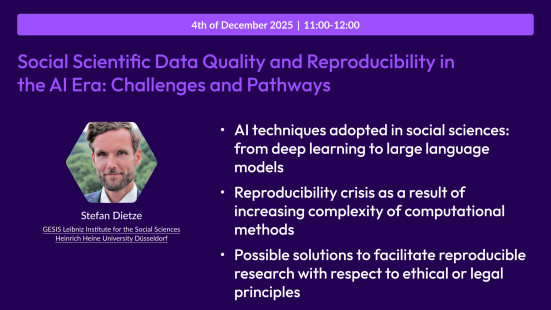
Upcoming: Colloquium with Stefan Dietze this Thursday
Join us for the December Colloquium, right after the DiTraRe Symposium! We move to the field of social sciences and our special guest will be Stefan Dietze (GESIS + HHU). Stefan will present AI techniques adopted in social sciences and the topic of reproducibility. We will also learn about current issues and possible solutions. See you on Zoom!
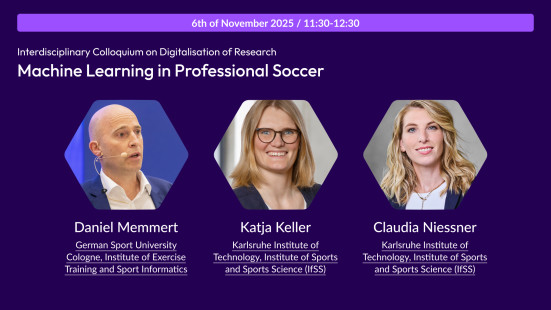
Recent: Colloquium with Sports Scientists
DiTraRe Presentation: Usecase "Sensitive data in sports science"
The MO|RE data platform makes physical fitness data derived from sports science studies available to both academia and the public. Research would strongly benefit from linking health with physical fitness data, e.g. in longitudinal data sets. However, publishing sensitive health (e.g. BMI, blood pressure) and other personal data (e.g. geolocation, social status) is challenging. An overarching concept for the secure handling of sensitive data is lacking, ranging from a trustworthy IT environment to sophisticated access management and auditing mechanisms, which ensures compliance with legal regulations.
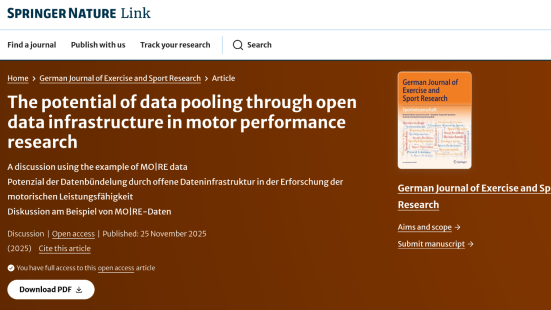
New publication of the sports science use case
This discussion paper examines the opportunities and challenges of implementing open data infrastructure in motor performance research, using the MO|RE data repository as an example. MO|RE supports FAIR principles through tailored functionalities like standardised metadata, harmonisation, and quality control. However, technical, legal, and cultural barriers still limit wider adoption. Recent developments in German sports science show progress toward fostering an open data culture. The paper argues that combining technical solutions with institutional support and cultural change is crucial to unlocking the full potential of open data for advancing motor performance research.
Eberhardt, T., Keller, K., Zimmermann, H. et al. The potential of data pooling through open data infrastructure in motor performance research. Ger J Exerc Sport Res (2025). DOI
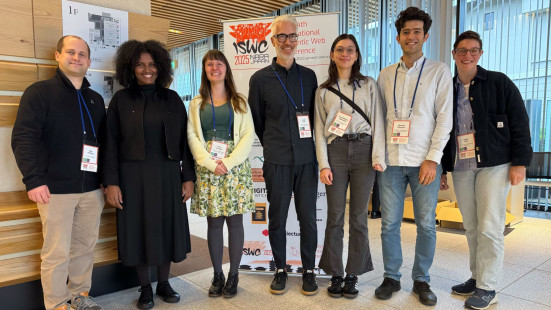
FIZ ISE group - Exploration and Knowledge Organisation dimension - at Sci-K workshop @ ISWC 2025
👏 Ebrahim Norouzi and Sarah Rebecca Ondraszek presented two DiTraRe papers at the Sci-K 2025 @ ISWC workshop in Nara, Japan 🗾
⚗️ AI4DiTraRe: Building the BFO-Compliant Chemotion Knowledge Graph
by Ebrahim Norouzi, Nicole Jung, Anna Jacyszyn, Jörg Waitelonis, and Harald Sack (FIZ Karlsruhe + KIT IBCS)
➡️ Presentation on Zenodo
➡️ Paper arXiv link, Zenodo link
🏃♀️➡️ Ontologies in Motion: A BFO-Based Approach to Knowledge Graph Construction for Motor Performance Research Data in Sports Science
by Sarah Rebecca Ondraszek, Jörg Waitelonis, Katja Klemm, Claudia Niessner, Anna Jacyszyn, and Harald Sack (FIZ Karlsruhe + KIT IfSS)
➡️ Presentation on Zenodo
➡️ Paper arXiv link, Zenodo link
💡Sci-K 2025 was the 5th International Workshop on Scientific Knowledge: Representation, Discovery, and Assessment
The workshop is co-organised by DiTraRe coordinator, Anna Jacyszyn.
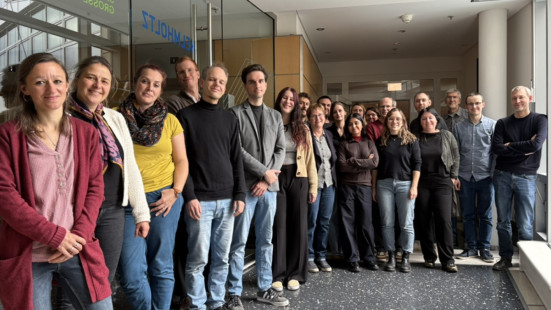
The way to a TA Data Lab 🔬
Representatives from ITAS research groups and TAB came together for an intensive exchange at the ITAS strategy workshop ‘On the way to a TA Data Lab’ in Berlin in November 2025. The workshop focused on the needs, methodological approaches and potential of data science for technology assessment. From stakeholder personas and goal definitions to the prioritisation of possible development paths, the workshop marked an important step towards a common methodological framework for a TA Data Lab. Many thanks to all participants for their enthusiastic contributions and constructive discussion!
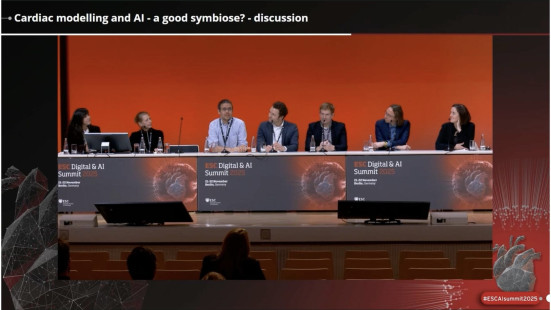
European Society of Cardiology Digital & AI Summit
KIT’s Computational Cardiac Modeling group showcased its latest research at the ESC Digital & AI Summit 2025 in Berlin. The team contributed across multiple sessions, including a featured talk on novel ablation strategies for atrial fibrillation using a computational heart model. Together with other leading European experts, Axel Loewe presented this work in the session focussing on ‘Cardiac Modelling and AI - A Good Symbiosis?’. Two posters complemented the presentation: one explored approaches to make AI systems more interpretable and clinically reliable, while the other introduced functional digital twins of the atria derived from intracardiac measurements. Together, these contributions highlighted our ongoing efforts to advance AI-driven and in silico methods for cardiac research.
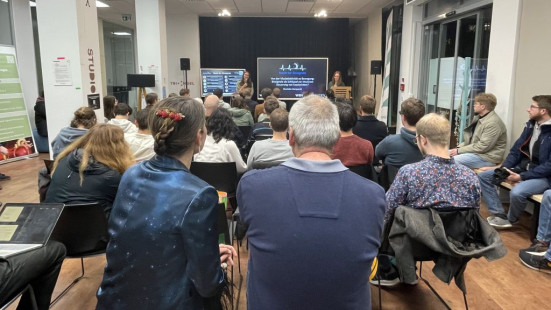
Nacht der Biosignale
We’re thrilled that around 80–90 participants joined us at Triangel STUDIO in Karlsruhe for an inspiring evening full of talks and discussions on biosignals in research, medicine, and AI. It was wonderful to see so much interest and engagement around this topic — we’re already looking forward to the Nacht der Biosignale 2027! ✨🌙
Research Collaboration in Japan
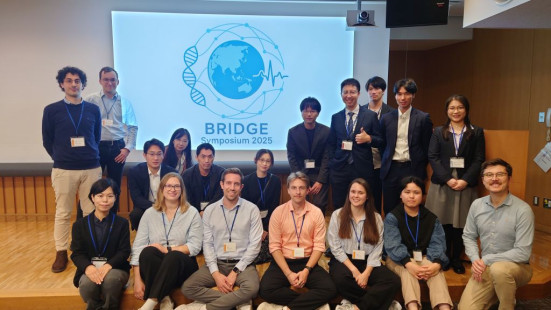
Several IBT members traveled to Japan to strengthen international academic ties. They joined the 10th HeKKSaGOn Presidents’ Conference in Osaka, where university leaders explored new directions for global collaboration. In addition, they took part in Kyoto University’s BRIDGE Symposium 2025 (International Symposium on Biomedical Research and Innovation for Digitalization and Global Exchange), where they showcased their latest work and engaged with colleagues from around the world.