October Colloquium recording
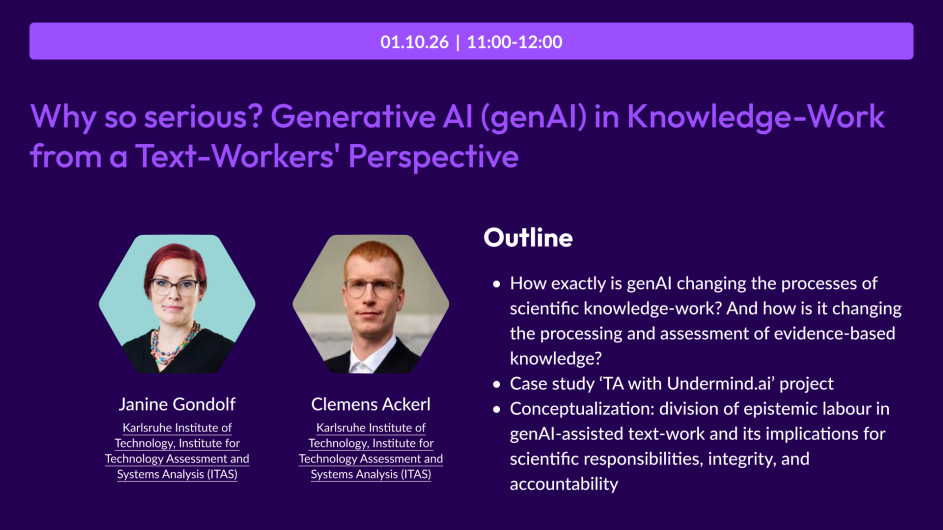
Our last Colloquium with Janine Gondolf and Clemens Ackerl who talked about Why so serious? Generative AI (genAI) in Knowledge-Work from a Text-Workers' Perspective is now available online! See the recording and presentation.
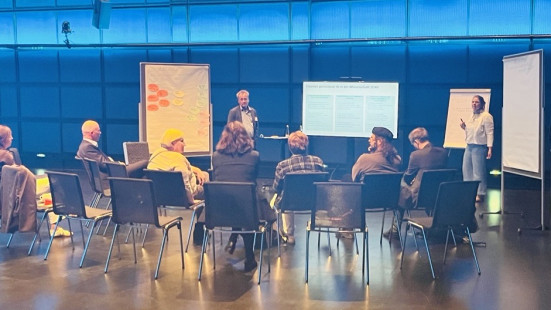
How can the futures of generative AI in science be envisioned?
This question was at the center of a dialogue session led by PD Dr. Andreas Lösch and Dr. Linda Nierling as part of the German Commission for UNESCO's 75th anniversary conference, “Ethics for Innovation: How Can Technology Be Responsible in the 21st Century?”, which took place at ZKM on 24 September 2026.
The session applied the Technology Assessment (TA) approach of Vision Assessment to examine possible future pathways for science in the age of generative AI. Together with distinguished experts from the field, participants explored a key question: Which futures of science can be expected, and which are socially desirable? The discussions were guided by the German Science and Humanities Council’s concept of “intellectual sovereignty”, which provides an important framework for navigating the opportunities and challenges associated with generative AI in academic research.
The exchange highlighted a substantial need for further dialogue and development within the scientific community. Key issues included how to address technologically accelerated processes in research, how generative AI may enable new forms of interdisciplinarity, and where limits on the use of AI in science and research may be necessary. The session underscored that shaping the future of science with generative AI is not only a technological challenge but also a societal and ethical one that requires ongoing reflection and collective engagement.
A Busy Conference Season for IBT
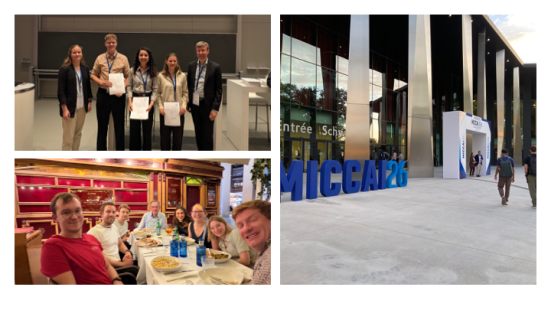
IBT was strongly represented at this year’s Computing in Cardiology (CinC) conference in Madrid, contributing five presentations and three posters on topics ranging from atrial cardiomyopathy and Takotsubo syndrome to ECG signal processing and cardiac fibrosis. Beyond the scientific program, the conference offered a great opportunity to reconnect with collaborators and exchange ideas with the international cardiac computing community.
A special highlight: Axel Loewe was elected to the CinC Board of Directors. Congratulations, Axel! This is a well-deserved recognition of his long-standing commitment to the CinC community.
IBT was also present at the STACOM 2026 workshop (Statistical Atlases and Computational Modelling of the Heart) in Strasbourg, where Jule presented her work on generative AI for biatrial geometry generation.
Finally, at the BMT conference in Augsburg, Helena won third prize in the student competition for her work on electroporation-mediated membrane permeability as a driver of cardioversion. Congratulations, Helena, on this excellent achievement!
NTA Regensburg: AI and the Future of Scientific Policy Advice
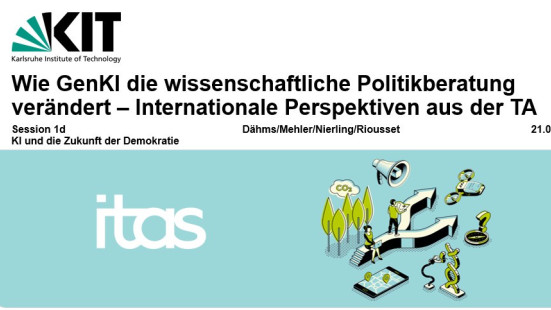
On 21 September 2026, Angelina Sophie Dähms and Johanna Mehler (with Linda Nierling and Pauline Riousset; ITAS and TAB, KIT) presented the study “Between Algorithm and Expertise: How Generative AI is Transforming Scientific Policy Advice – International Perspectives from Technology Assessment” at the 12th NTA conference “Societal Change through AI? Against Disorientation” in Regensburg, Germany. In the session “AI and the Future of Democracy”, the team presented findings from expert interviews with international technology assessment (TA) institutions in Finland, the UK, Norway and the USA. The findings show that GenAI is increasingly being integrated into TA work practices, particularly for tasks such as literature research, data preparation and foresight. At the same time, there is a significant gap between the current capabilities of GenAI tools and the specific requirements of TA regarding traceability, scientific quality and responsibility. The presentation highlights the importance of a cautious yet proactive approach to GenAI adoption in scientific policy advice and points to the need for tools and practices that are aligned with the specific standards and requirements of TA.
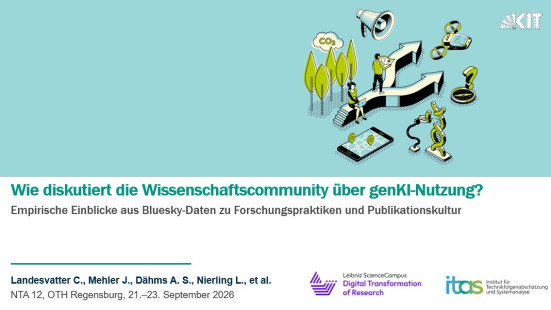
NTA Regensburg: How is the scientific community discussing generative AI?
On 22 September 2026, Camille Landesvatter and Johanna Mehler (et al.; TAB and ITAS, KIT) presented initial findings from the project “How is the scientific community discussing the use of generative AI? Empirical insights from Bluesky data on research practices and publication culture” at the 12th NTA conference “Societal Change through AI? Against Disorientation” in Regensburg, Germany.
The project examines how the use of GenAI in academic research is discussed in public discourse. Based on a systematic analysis of discussions on Bluesky, it addresses two central research questions: 1. Which topics can be identified in the Bluesky discourse on the use of GenAI in academic research? 2. Which opportunities and risks are articulated regarding the use of GenAI in the science system?
The analysis considers different areas of scientific practice, including idea generation, academic writing, peer review and publication processes, as well as broader questions of scientific integrity, and discussed the search strategy, exploration and data quality of the collected material. The presentation also explored the potential of social media data for empirical technology assessment and for investigating current transformations in science.
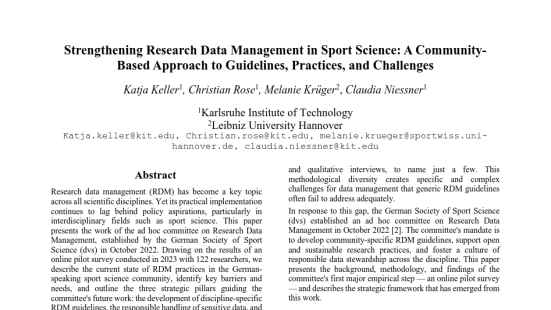
IfSS in "Data Stewardship goes Germany 2025" proceedings
The publication is part of Data Stewardship goes Germany 2025, which brings together a collection of (extended) abstracts reflecting the diverse topics and perspectives presented at DSgG 2025, with a particular focus on practical approaches and best practices in data stewardship.
Keller, K., Rose, C., Krüger, M., & Niessner, C. (2026). Strengthening research data management in sport science: A community-based approach to guidelines, practices, and challenges. In F. Schubö & K. V. Wedlich-Zachodin (Hrsg.), Data Stewardship goes Germany 2025 – Data stewardship in day-to-day research activities.
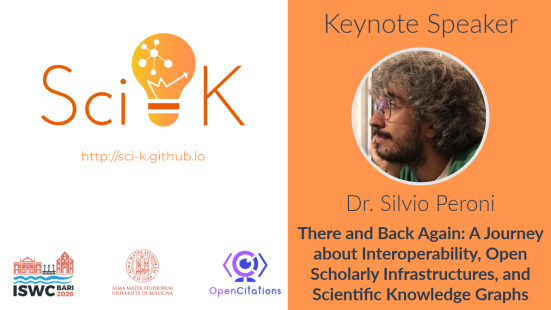
Upcoming: Sci-K workshop @ ISWC 2026 keynote announced
📢 We are thrilled to announce this year's Sci-K @ ISWC keynote speaker: Silvio Peroni!
🔑 Keynote topic: There and Back Again: A Journey about Interoperability, Open Scholarly Infrastructures, and Scientific Knowledge Graphs
🧑🎓 Silvio is an Associate Professor at the Department of Classical Philology and Italian Studies, University of Bologna, and a director of OpenCitations.
⬇️ Find the abstract of Silvio's talk below.
While it is difficult to formally define what they are precisely, Open Scholarly Infrastructures (OSIs) are a fundamental building block for the implementation of the Open Science goals as introduced by UNESCO, since they play roles in reforms, address critical gaps, and, more generally, enable more inclusive, equitable, and transparent science in all disciplines and academic communities. Even if the OSI community broadly agrees that the sum of their endeavours could surpass the outreach of proprietary systems, presenting such OSIs as a unique decentralised commodity requires first addressing one of the most crucial and delicate problems in information systems: interoperability. In this talk, I will introduce recent efforts from the past few years to provide standards and tools that support the implementation of interoperability, particularly at the technical and semantic levels, with a focus on the OSIs maintaining Scientific Knowledge Graphs (SKGs), which is one of the main topics of the Sci-K workshop series.
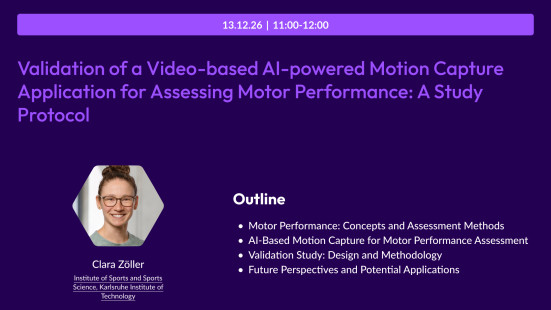
Upcoming: December Colloquium with Clara Zöller
Join our Colloquium on 3 December at 11:00 via Zoom to attend the talk of our special guest Clara Zöller, Institute of Sports and Sports Science, Karlsruhe Institute of Technology. Clara will talk about Validation of a Video-based AI-powered Motion Capture Application for Assessing Motor Performance: A Study Protocol.